

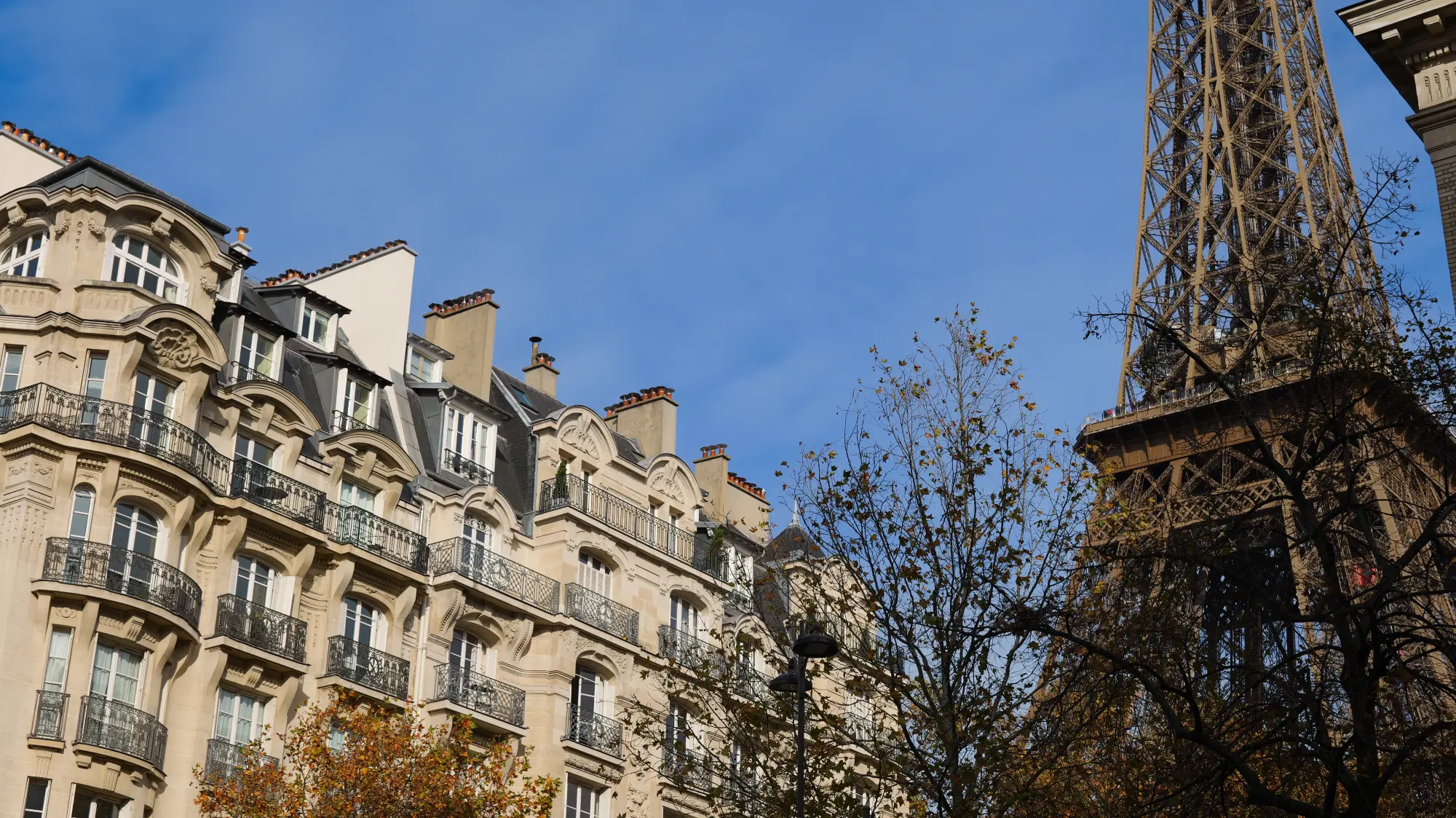
Do you dream of buying an apartment in Paris, whether as a primary residence, a pied-à-terre (second home), or an investment? In this article, I will guide you step-by-step through the key stages of purchasing real estate in Paris. The French real estate transaction system is unique, and the Paris market can be complex and difficult to navigate. Therefore, it is essential to gather information early on to prevent major mistakes that could cost you significant time and money.
My name is Julien Baron-Guibal, and I am the founder of Barons Realty, the #1 real estate agency for international buyers in Paris. In short, I exclusively represent international buyers in their acquisition projects in Paris. As a buyer’s agent, my mission is to help you save time and money while ensuring your interests are fully protected at every stage of the transaction.
One question comes up frequently: How do you buy property in Paris as an international buyer? Today, I’m here to answer that question. Before I begin, it’s important to keep in mind that buying property in France often takes longer than in your home country, because French law requires specific steps to protect buyers throughout the transaction.
With that in mind, there are eight key steps to becoming the proud owner of a property in Paris. Let’s break down each step. I’ll provide local insights to help you avoid common pitfalls and ensure your purchase goes as smoothly as possible.
Step 1: Set a Realistic Acquisition Budget
The first step is to define your acquisition budget. Without a clear number in mind, it would be difficult to start your property search. You’ll need to consider various costs: sometimes one-time fees, while other times recurring expenses that will continue throughout your ownership.
Let’s start with the one-time costs you’ll need to consider when buying a property in Paris.
The first cost, naturally, the property price.
The second cost to consider is the fee charged by the real estate agency representing the seller. In most cases in Paris, and France overall, the seller’s agency fees are already included in the property’s listed price. To be sure, look for the term “FAI”, which stands for “Frais d’Agence Inclus” (Agency Fees Included). If this term is not listed, check the property description for any mention of fees. If nothing is specified, you can assume the asking price includes the seller’s agency fees.
You’ll need to add one more unavoidable cost to your budget: the notary fees. This is a mandatory cost for every real estate transaction in France, whether you’re purchasing an apartment, a house, a parking space, or a commercial property. For a property that is considered new, meaning it was built less than five years ago and has never been occupied, these fees typically range from 2% to 3% of the purchase price. Paris, however, is a historic city with an older real estate market, where approximately 99% of properties are classified as older homes. In most cases, notary fees will range between 7% and 8% of the purchase price, with 7.5% commonly used as a general guideline.
Finally, the last one-time cost to consider is the buyer’s agent fee if you decide to work with a dedicated professional who can help you save time and money while protecting your interests throughout the purchase process. In France, a buyer’s agent exclusively represents the purchaser, unlike traditional real estate agents who typically represent the seller and are primarily responsible for marketing the property. The buyer’s agent’s role is to guide the buyer through every stage of the acquisition, from identifying suitable properties and organizing visits to negotiating the offer and assisting with the legal and administrative steps of the transaction. Their goal is to protect the buyer’s interests and help them make informed decisions in what can be a complex market. Because the buyer’s agent works exclusively for the purchaser, their fees are paid by the buyer. In return, the buyer benefits from independent advice, local market expertise, and guidance throughout the entire purchasing process. In many cases, this guidance can help buyers avoid costly mistakes or negotiate more effectively, often offsetting the cost of the service itself. You can view our fee structure here to get an idea of the typical fees for a dedicated buyer’s agent guiding you through the purchase.
Now, let’s move on to the recurring costs you will face as a property owner.
The first recurring cost is the property tax, referred to as “taxe foncière” in France. Expect to pay between 10 euros and 30 euros per square meter per year. Compared to other major global cities like London or New York, this amount is relatively low. Keep in mind that when buying a property in France, it is common practice for the buyer to pay the property tax on a prorated basis, meaning the tax is divided between the buyer and the seller according to how long each owned the property during that year. For example, if the property is acquired on July 1, you would be responsible for six months of property tax.
The second recurring cost to consider is the residence tax, known in France as the “taxe d’habitation”. This tax only applies if the property you purchase is used as a secondary residence. In general, a property is considered a second home if it is not your primary residence and is used only occasionally, such as for vacations or short stays, or if it is not rented to a tenant who uses it as their primary residence.
This tax is calculated based on the property’s cadastral rental value, which represents an estimated annual rental value determined by the French tax administration. This value does not correspond to the market rent but rather to an administrative estimate used to calculate certain property taxes. The tax amount is then determined by applying a rate set by the City of Paris (approximately 20.32% in 2026), along with an additional 60% surcharge applied to secondary residences throughout the city.
The total amount therefore varies from one property to another and can amount to several thousand euros per year depending on the apartment. However, it generally remains modest compared with similar taxes in many other major international real estate markets.
Unlike the property tax, this residence tax is not prorated between the buyer and the seller during the year of purchase. Instead, the buyer will begin paying it starting January 1st of the following year. The first payment of this tax must be made in full. Starting the following year, you can request monthly payments, and the tax will then be automatically collected in 12 equal installments.
The third recurring cost is the homeowners association (HOA) fees, known in French as the “charges de copropriété.” Ranging from 20 to 60 euros per square meter per year, once again, these charges are comparatively low when measured against other leading global real estate markets.
These fees can be higher if the building has an elevator or a concierge, or if the apartment’s heating and hot water are centrally supplied (either by gas or electricity) and included in the building charges. In these cases, the term “collective” (or “collectif” in French) will appear in the property documents. However, if heating and hot water are not included in the HOA fees, the term “individual” (or “individuel” in French) will be indicated. This means the utilities must be managed directly by the owner and typically results in lower HOA fees. Regardless of whether the heating and hot water are collective or individual, a mandatory diagnostic report for the apartment, arranged by the seller, will indicate the estimated minimum and maximum annual energy costs for heating and hot water, helping you budget more easily.
But keep in mind that even if heating and hot water are included in the HOA fees in some co-owned buildings, you are still responsible for your own electricity (outlets, appliances, and personal lighting).
The fourth recurring cost to consider, although very low, is homeowners insurance. It is mandatory in France for all co-ownership properties, which account for the majority of real estate in Paris. This insurance typically covers water damage, fire, explosions, and personal liability. The cost is relatively modest, ranging from €100 to €1,000 per year, depending on the property, the value of the personal belongings inside, the coverage options selected, and the profile of the insured.
Finally, the last recurring cost to consider is renovation and maintenance work. I am not referring here to major renovations that you might undertake immediately after purchasing the property, but rather to ongoing maintenance over the years, both within the apartment itself and in the building’s communal areas. While these expenses are not mandatory, I strongly recommend setting aside a budget to handle future maintenance and unexpected repairs with confidence. That said, this type of cost is difficult to estimate without looking at a specific apartment as an example.
Step 2: Choose a Neighborhood and Define Your Search Criteria
Now that you know your budget for your real estate purchase in Paris, you can begin to focus strategically on one or several neighborhoods. As you may have noticed, I refer to neighborhoods rather than “arrondissements” (districts). True Parisians rarely speak in terms of “arrondissements,” as each one is divided into neighborhoods with their own character and atmospheres, some of which are more desirable than others.
Take the 1st arrondissement, the oldest district in Paris and home today to the Louvre Museum. Within the same district, property values can vary significantly. For example, the Vendôme neighborhood, known for its international clientele and luxury boutiques, is far more sought-after than the Halles neighborhood, which has a more student-oriented, touristy, and commercial atmosphere. Naturally, this difference is reflected in property prices: expect an average of €12,356 per square meter in the Halles neighborhood (Le Figaro Immobilier, 2026), compared with €14,698 per square meter in Vendôme (Le Figaro Immobilier, 2026). This pattern holds true across all of Paris’s arrondissements.
Next, it’s time to define your search criteria. These should align not only with your budget, but also with the style and character of your preferred neighborhood. For example, if having an elevator is essential, the Marais may not be the ideal choice, as many of its historic buildings date from the 17th and 18th centuries and were not originally designed to accommodate elevators. In contrast, 19th-century Haussmann buildings, which are common across many Paris neighborhoods, are more likely to feature elevators or to have had them installed later.
When defining search criteria, these are the main points I review with the buyers I assist:
- The minimum desired surface area
- The number of bedrooms and bathrooms
- The floor level (high or low) and whether an elevator is required
- The apartment’s natural light and exposure (north, south, east, or west)
- Whether the apartment faces the street or the courtyard
- The presence of outdoor space, such as a balcony or terrace
- The apartment style and architectural features
- The property’s condition (renovated, requires light renovation, or full renovation)
- The apartment’s energy efficiency rating and heating system
- The condition of the building and its common areas
- The building amenities, such as a concierge or secure entrance
- The storage space, such as a cellar (cave) or built-in closets
- Any personal priorities, such as proximity to parks, schools, or public transportation
I recommend prioritizing these criteria into two categories: “must-haves,” which are non-negotiable, and “nice-to-haves,” which are features you can be more flexible about. This approach is particularly important in the Paris real estate market, where buyers often need to adjust their expectations compared with what they may be used to in their home country.
For example, a smaller but very bright apartment will often attract more demand than a larger one that lacks natural light. In the same way, a bright third-floor apartment without an elevator may sell faster than a darker second-floor apartment that has one.
Step 3: Schedule Visits Strategically
At this stage, you have set your budget, chosen your preferred neighborhoods, and outlined your search criteria. Now it’s time to start visiting properties. I always recommend touring multiple properties, even if the first one feels perfect. Visiting multiple properties allows you to evaluate them objectively and redefine your search criteria along the way. These showings help you determine whether your expectations regarding location, features, and price realistically align with your budget. In some cases, you may need to compromise on certain criteria or adjust your budget.
Visiting an apartment isn’t just about inspecting the unit itself. It also means paying attention to the building’s common areas. Although they may seem secondary, their condition can reveal a great deal about how well the building is maintained and managed by the homeowners association. A proper visit should also include reviewing the relevant documents and inspection reports related to both the apartment and the building. In addition, if you are interested in a property, I always recommend taking the time to explore the surrounding neighborhood. This will help you determine whether it meets your daily needs in terms of shops, leisure activities, and public transportation.
It is also common in France to schedule follow-up visits to see an apartment at a different time of day in order to assess factors such as natural light or noise. Buyers may also return with contractors to obtain estimates for potential renovation work. Do not hesitate to request this from the agent. However, keep in mind that some apartments sell so quickly that there may not always be time for a second visit. This is one reason why having a local expert by your side at this stage can be particularly valuable. An experienced professional can provide insight into current market demand and advise you when timing is critical. For example, I work closely with a trusted general contracting company that can provide the international buyers I assist with quick, no-obligation renovation estimates so they can make informed decisions without missing rare opportunities.
Step 4: Draft a Strong Purchase Offer
After touring several apartments, you may finally find the one that feels right. At this point, it is time to draft your purchase offer. This is a crucial step, as this seemingly simple document, and the way it is structured, can determine whether your offer is accepted or rejected.
In France, a purchase offer involves more than just the price. The contingency clauses you include, known in France as “conditions suspensives,” can also be decisive. These clauses are important because they protect you by allowing you to withdraw from the transaction without penalties if certain conditions are not met. However, it is equally important to remain strategic and include only the necessary clauses, as too many conditions may discourage the seller. The best approach is to anticipate potential issues and request as much information as possible from the agent before submitting your offer. If certain questions remain unanswered and the property is highly sought after, including a contingency clause addressing those specific concerns can be a prudent choice.
Having professional guidance at this stage is not only helpful but often essential. Thanks to their knowledge of the market, a Parisian real estate professional can advise you on the potential room for negotiation and communicate directly with the seller’s agent. These conversations can reveal valuable information about the seller’s position as well as competing offers from other buyers, including their proposed price and any contingency clauses. Such insights can help you save a significant amount of money and may increase the likelihood that your offer is accepted.
In Paris, it is common for desirable apartments to receive multiple offers at the same time. It is important to remember that the purchase price is not the only factor sellers consider. In my experience, a slightly lower all-cash offer without a financing contingency will often prevail over a higher offer that depends on bank financing.
For this reason, I consider this fourth stage to be the point at which the guidance of a local expert becomes particularly valuable, especially in a fast-moving market like Paris where desirable properties can sell quickly.
Step 5: Sign the Preliminary Sales Agreement
Once the seller has accepted your offer, the next step is signing the preliminary sales agreement, known in French as the “promesse de vente” or “compromis de vente.” This document acts as a pre-contract between the buyer and the seller. It is typically signed one to four weeks after the offer is accepted. Unlike the final deed, which must be signed at the notary’s office (as we will discuss later), this pre-contract can be signed at the selling agent’s office, though I strongly recommend signing it at the notary’s office.
A notary in France is a public officer appointed by the Ministry of Justice to draft and authenticate legal documents. In real estate transactions, the notary ensures that the sale complies with French law and performs a role similar to that of real estate attorneys or conveyancing solicitors in countries such as the United States or the United Kingdom.
Before signing the preliminary sales agreement, both parties must provide numerous documents to their respective real estate agents, who will then forward them to their notaries to prepare the legal file for the transaction.
At this stage, a deposit of 5% to 10% of the property’s value is typically placed in escrow, meaning the funds are held in a secure account by the notary until the transaction is completed. This deposit guarantees the buyer’s commitment to the purchase and compensates the seller if the buyer withdraws without valid contractual grounds. The buyer wires this amount to the notary’s escrow account, where it remains until the final deed is signed. If the sale is completed, the deposit is deducted from the final purchase price.
Once the notaries have collected all the necessary documents and finalized the file, a date is scheduled for signing the preliminary sales agreement. This signing can also be completed remotely. If you are not a resident of France, it is possible to sign electronically from your home country.
Note that this preliminary agreement initially binds the seller, while the buyer benefits from additional legal protections. As a buyer, you benefit from a legal 10-day cooling-off period during which you may withdraw from the transaction without penalty. This period begins the day after the contract is officially notified to you, usually by registered letter. If you are assisted by a qualified real estate professional, you may also benefit from additional protection beyond these mandatory 10 days through contingency clauses included in your initial purchase offer. For example, if they included a financing contingency and the bank unfortunately denies your loan, you can still withdraw without penalty after this 10-day period and recover your 5% to 10% deposit held in escrow. Conversely, if you are poorly advised and unprotected during this purchase, and for any reason you can no longer buy the property, the 5% to 10% deposit held in escrow may be retained by the seller.
Although the notary is legally required to remain neutral and represents both the seller and the buyer, I always advise the international buyers I assist to be represented by their own notary.
Just like choosing the right agent, selecting the right notary is essential, as they become a key partner throughout the transaction. Their expertise is crucial, and their ability to communicate in English is particularly valuable, not only to ensure you fully understand the process but also to avoid the additional cost of a translator. For this reason, I consistently recommend the same notary to my clients, the head of one of the most respected notary offices in Paris.
Having your own notary won’t double the standard 7.5% fees. Your notary and the seller’s notary will split the portion of the fees that doesn’t go to the state. Signing the preliminary sales agreement at a notary’s office will cost a few hundred euros. Although this has become standard practice for many buyers in Paris, I still consider it an essential investment in protecting your interests.
Step 6: Secure Mortgage Financing
The preliminary agreement has now been signed, either at the notary’s office or remotely. The next step, if you require financing, is to apply for a mortgage loan.
If you plan to pay in full, you can skip directly to Step 7.
First, it’s important to know that France is relatively accessible to international buyers as non-residents can also obtain a mortgage. You don’t need to be a French citizen to borrow from a French bank.
Mortgage terms in France can be relatively long, typically 15 to 25 years, which helps keep monthly payments lower. However, French banks are generally more cautious with foreign buyers, and in most cases you’ll need a down payment of 30% to 50% of the property price. Another key advantage is that mortgage rates in France are fixed for the entire duration of the loan. As of 2026, interest rates for foreign buyers typically range between 3.5% and 4.25%. However, your personal financial profile will influence these numbers. When an application is particularly strong, banks may offer rates closer to those available to residents, around 3.1% to 3.4%, and may also approve a longer-term mortgage. In addition, French banks generally apply a maximum debt-to-income ratio of around 35% of your net monthly income. This means that your total monthly loan payments, including the new mortgage and any existing debts, should not exceed roughly one-third of your income.
Be aware that in France, no bank will start processing a financing application until the preliminary sales agreement has been signed. However, I strongly recommend preparing for this step in advance by contacting a bank and beginning the process of opening an account, as many documents will be required and the process can take time. It is also helpful to inform the bank that you intend to apply for a mortgage with them in the near future. Banks typically earn more revenue from loans than from simple account openings. To demonstrate your commitment, I also recommend depositing some funds into the new French account when you open it, as these funds will likely be needed during your time in France.
A good bank loan isn’t just about the interest rate. You also need to take into account the loan term, the size of the down payment, the cost of mortgage insurance, the repayment schedule, and the flexibility and conditions of the loan. This is a crucial step in your purchase, as the financial aspects of the loan will directly impact your project in both the short and long term.
If you decide to finance your purchase with a mortgage, you should take the following costs into account:
- Principal repayment (recurring): The portion of your monthly payment that goes toward repaying the borrowed capital.
- Monthly interest (recurring): Interest is included in your monthly payment and is calculated based on the loan’s annual interest rate.
- Mortgage insurance (recurring): Usually 0.35% to 0.50% of the borrowed amount per year. In France, this is called “assurance emprunteur.” For residents, it typically ranges from 0.20% to 0.40%, while for non-residents it generally ranges from 0.35% to 0.60%.
- Down payment (one-time): Typically 30% to 50% of the property price for international buyers.
- Application fees (one-time): Usually between €500 and €1,500. In France, these are called “frais de dossier.”
- Guarantee or mortgage registration fees (one-time): Around 1% to 1.5% of the borrowed amount.
As mentioned earlier, real estate transactions in France take time. This is largely because the legal process is designed to protect the buyer and provide sufficient time to complete all necessary steps, particularly securing bank financing. You will then have two to three months after signing the preliminary sales agreement to complete this loan application.
Remember that your banker is a partner in your real estate transaction. Treat them as an ally, while keeping in mind that their goal is to sell you as many services as possible. Once again, local advice from your real estate agent or another experienced professional is essential to help you negotiate the best possible mortgage.
That’s why I personally guide my clients through the entire bank loan process. I work closely with the division specializing in international clients at a well-known bank, making the process faster and more efficient for my clients.
Once the bank has officially approved your loan, you will need to inform your real estate agent and your notary. They will then pass this information on to the seller’s side, and a date will be set for signing the final deed.
Step 7: Sign the Final Deed
It’s the big day. On this day, the property officially changes hands, and you become the legal owner. Before heading to the notary’s office to sign the final deed, called the “acte authentique” in French, you will complete one last walkthrough of the apartment. This final visit usually takes place on the same day as the signing, just beforehand, and is intended to confirm that the property remains in the same condition as during your prior showings and at the time your offer was submitted. For example, if significant damage such as a water leak has occurred in the meantime, you have the right to withdraw from the transaction. That said, in most cases, this final walkthrough is simply a formality.
Once you’ve confirmed that everything is in order, you will go to the notary’s office, accompanied by your real estate agent, to sign the final deed. The notary will begin by summarizing the file and then review the deed with you, explaining its key provisions before you sign. As a reminder, you should transfer the remaining purchase funds and notary fees to your notary about a week in advance to allow for wire transfers and processing. The notary will then distribute the funds to the seller and other relevant parties once the deed is signed.
If you are not in Paris, your real estate agent can handle the final walkthrough on your behalf. Just like with the preliminary agreement, it is also possible to sign the final deed remotely. I often remind my clients that they don’t need to be physically present to sign the preliminary agreement. However I usually encourage them to attend the signing of the final deed, as it marks the completion of their project and is truly a moment worth celebrating.
Step 8: Receive the Keys
You are at the notary’s office (or attending remotely) and have just signed the final deed. At this moment, ownership officially transfers to you, and you become the legal owner of the property. You receive the keys and can take possession of the apartment immediately. This is the perfect opportunity to open a bottle of Champagne and celebrate this special milestone in true French style.
Buying an apartment in Paris as an international buyer can feel complex at first, but with the right preparation, the process becomes far more manageable. From defining your budget to receiving the keys, each step requires careful attention, local knowledge, and strategic decision-making. With the right guidance, purchasing in Paris can be not only achievable, but deeply rewarding.
Disclaimer: Please note that tax rates, financing conditions, and transaction costs may vary depending on the property and the buyer’s individual circumstances.